%2520(1).avif&description=How to Evaluate Similar Machining Proposals)


.png)
%2520(1).avif)
There are a few things worse than getting components you can’t use. Sometimes you get a delivery that is out of spec. Other times, changes are made to a design that you didn’t approve, or the supplier demands more money for an approved design due to “unexpected complexity.” This makes properly vetting suppliers a critical part of any business, especially for something as important as machined medical components.
If you’re struggling with how to evaluate machining vendors with similar proposals, you may be missing critical information. The proposals and the companies should be viewed not just by price but through a Quality, Cost, and Delivery (QCD) approach. Quality issues hamper production and can lead to problems with customers. Delays can result in missed deadlines or require costly overtime to meet expectations. Even if the bid is low, these issues can cost you more in the long run.
Choosing a machining partner, especially for something as heavily regulated and high-risk as medical device components, requires a holistic approach. Here’s what you should look at to make fair comparisons between competitors and ways to streamline the evaluation process.

Certifications: The First Step in Choosing a Supplier
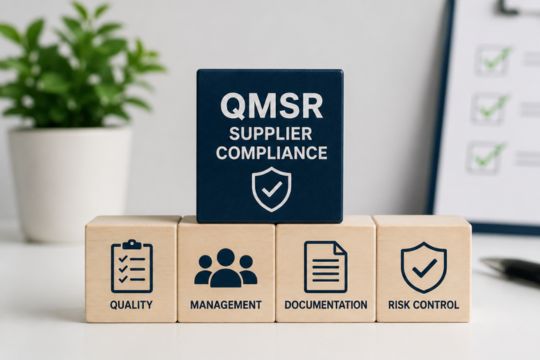
Certifications don’t just prove a machining vendor is capable. In many cases, they are required to meet customer or contractual requirements. There are two key standards you should look for when assessing competing bids.
ISO 9001
This internationally recognized standard focuses on general quality control. It targets continual improvement and measures customer satisfaction. For machining vendors, this pairs closely with their machining quality management policy.
ISO 13485
This standard is aimed specifically at the medical equipment market. It focuses on meeting regulatory requirements, personnel training, and safety. Unlike ISO 9001, ISO 13485 makes management directly responsible for ensuring regulatory compliance.
Choosing a machining vendor with both ISO 9001 and ISO 13485 certifications, like Swiss Machine Products, makes it easier to verify supplier qualifications and ensure that every component is audit-ready.
RFI, RFP, and RFQ: Getting Information from Vendors
RFI, RFP, and RFQ are all ways to gather information from vendors. Each method has a specific purpose in the supplier evaluation process.
Request for Information (RFI)
This is an overview of the machining vendor, including their certifications, products, average timelines, and additional services. If several vendors might fit your requirements, RFIs can help narrow down your list of prospective partners.
Request for Proposal (RFP)
This defines exactly what you need from a machining vendor. It includes the scope of the contract, project goals, requirements, and evaluation criteria. A well-written RFP allows vendors to tailor proposals to meet requirements while leveraging their strengths. For example, they may offer design or specification alternatives that meet your needs or provide special pricing structures based on volume.
Request for Quote (RFQ)
This focuses primarily on cost. It’s typically used for commodity items that don’t require specialized design or setup to produce.
For medical components, it often makes sense to focus on RFPs. There are four key points to evaluate in every RFP response:
- Price
- Technical capabilities and experience
- Compliance
- Support
When you request an RFP from an experienced company like Swiss Machine Products, you should expect a detailed overview of both how the parts will be made and how communication and support will be handled. Strong quality management and responsive customer service are critical for meeting deadlines and maintaining budget control.
Supplier Evaluation: Choosing Who to Work With
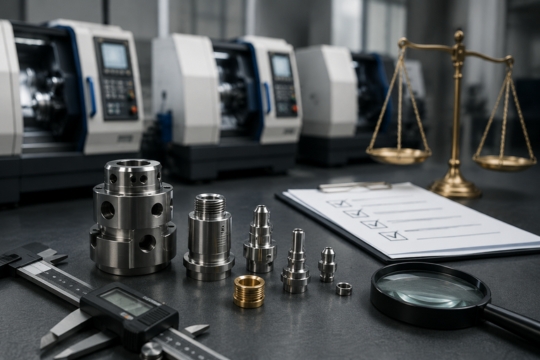
When you’re learning how to evaluate machining vendors with similar proposals, remember there’s more to a partnership than what’s written in an RFP. Vendors should be analyzed across the entire relationship.
Start by examining technical capabilities and how they match your requirements. This includes the materials they can machine, the equipment they use, and the supporting services they offer, such as CAD drafting or prototype development.
Once you begin working with a vendor, performance should be evaluated periodically. Be aware of any output, communication, or delivery performance changes, and work together to resolve issues. When it’s time for contract renewal, look back on their overall history and assess whether they consistently met your expectations.
At each step, answer these questions about their performance.
Pricing
- Are they priced competitively?
- Do their prices match the quality of their products?
- Do they have a fair pricing structure?
- How do logistics costs affect the total price of acquiring parts?
Quality
- Do they meet your specifications and quality standards?
- Can they back this up with inspection reports and certifications?
- What is their history of defects or rejected parts?
Delivery
- What is their on-time delivery rate?
- Can they handle changes in demand?
- How do they manage back orders or delays?
Customer Service
- How responsive are they when issues arise?
- Do they provide technical support when needed?
Financial Stability
- Are they financially stable, or at risk of closing?
- Do they have the resources to invest in new equipment or training?
- Can you develop a secondary source for critical components if needed?
Procurement Benchmarking: How Do Vendors Compare?
If you’re still trying to figure out how to evaluate machining vendors with similar proposals, procurement benchmarking often has the answers you need. This process compares vendors across several aspects of the business relationship.
- Cost: Are costs in line with the market? Should you negotiate rates or move to another vendor?
- Spending visibility: How much transparency do you have into how they use your budget? Increased visibility can uncover off-contract spending or unapproved charges.
- Supplier performance: How well does the supplier handle quality, deadlines, and responsiveness?
- Risk management: How does the company manage supply or compliance issues?
- Accounts payable: Are billing and payment processes accurate and efficient?
- ESG performance: How does the company align with your environmental, social, and governance goals?

Creating an Approved Supplier List (ASL)
There’s no reason to start from scratch every time you need a new machining partner. An Approved Supplier List (ASL) keeps track of vendors that have been evaluated and meet your company’s requirements.
Each listing should include:
- Name and contact information
- Goods and services they are approved to supply
- Dates of approval and re-evaluation
- Risk level
- Supplier status
- Supporting documentation
If you’re onboarding a new supplier, consider requesting a pilot build to judge their quality. This might be used as a secondary source for an existing part or as part of a new product’s Production Part Approval Process (PPAP).
Risk level reflects how much a supplier’s performance can affect your end product. Contract manufacturers typically represent the highest risk, as their output directly impacts both product quality and delivery timelines. This is where the QCD model helps. A low bid may look appealing, but poor quality or delays can cost far more in the long term.
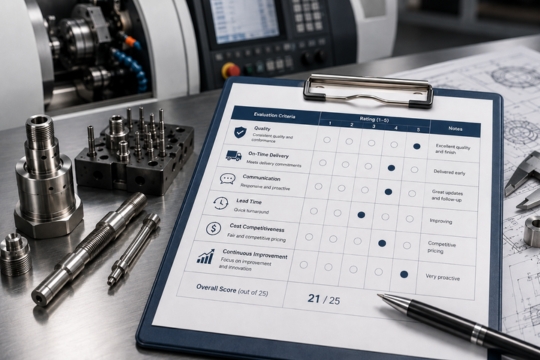
Supplier Evaluation Matrix: Creating a Scorecard for Comparison
If you want to make comparing machining vendors easier, consider developing a supplier evaluation matrix. This structured tool helps you assign scores to key performance categories and evaluate suppliers objectively.
A machining supplier matrix usually includes:
- Certifications
- Quality (precision benchmarks and defect rates)
- Audit status and audit history
- On-time delivery rate
- Support and responsiveness
- Cost
Each category is assigned a score, typically from 1 to 10. You can then weight and combine these scores to generate a total supplier rating. Weighting should reflect your priorities. For instance, if lead times are critical, delivery performance and audit history should carry more weight than cost.
PPAP and FAI for Machining: Starting a Relationship on the Right Foot
Once you begin working with a new machining vendor, PPAP and FAI must ensure they can deliver components that meet your exact requirements.
Production Part Approval Process (PPAP)
This process covers all the work a manufacturer does before production begins. It involves creating a process plan, defining quality control points, and verifying that the product meets all specifications. It also includes a Failure Mode and Effects Analysis (FMEA) to identify potential weaknesses. A reliable vendor will provide engineering drawings, specifications, material certificates, and test results to verify their process before production approval.

First Article Inspection (FAI)
FAI verifies that the first part or batch produced meets your specifications. This involves inspecting dimensions, materials, and functionality. The vendor should supply all documentation, including inspection reports and test results.
By partnering with a company like Swiss Machine Products, which follows documented PPAP and FAI procedures, you can be confident that every part is manufactured correctly the first time.
Red Flags in Machining Bids
No matter where you are in the bidding process, a few warning signs suggest a vendor might not be fully transparent.
- The supplier claims certifications but cannot provide verifiable documentation.
- The vendor does not have a clear machining quality management policy or is defensive when asked about quality control.
- A low bid is not itemized or explained, suggesting possible corner-cutting.
- Maintenance and calibration records are inconsistent or unavailable.
- The facility lacks a dedicated quality control area.
- The vendor refuses to sign an NDA.
- They will not provide verifiable customer references.
- They cannot explain how they handle supply chain disruptions.
Experienced suppliers like Swiss Machine Products can easily provide recent customer references, audit records, and quality documentation.
Choosing the Right Machining Partner for Medical Components
Understanding how to evaluate machining vendors with similar proposals gives procurement teams a clear advantage. It helps ensure that every partnership supports compliance, consistency, and long-term reliability.
When you need mid-size production runs of precision-machined medical components, Swiss Machine Products should be on your list of trusted vendors. We are ISO 9001 and ISO 13485 certified and have delivered high-quality components to medical, automotive, and military customers since 1959.
Contact us to learn more about our CNC machining capabilities and see how our precision equipment and documented processes can support your next medical device project.