.png)
If you’ve been in procurement long enough, you know the moment that matters is not when you receive quotes. It’s when you have to defend your shortlist.
You’re balancing cost, timelines, internal pressure from engineering, and the very real risk of audit exposure. And when the parts in question are tied to regulated products, the stakes shift quickly. Suddenly, your ability to select vendors FDA compliance medical machining is not just a sourcing decision. It becomes a compliance decision that can directly impact product release and audit outcomes.
In practice, most supplier lists look strong on paper. Certifications are listed. Capabilities are broad. Lead times seem reasonable. But when you dig deeper, gaps start to appear. Missing documentation. Unclear traceability. Processes that sound compliant but are not consistently controlled.
Over time, you start to see that shortlisting is less about who can make the part and more about who can support your regulatory responsibilities without creating downstream risk.
This is where shortlisting matters most.
In this article, you’ll learn how to evaluate machining vendors through a procurement lens that aligns with FDA expectations, quality system requirements, and real-world audit scrutiny. The goal is simple: help you build a shortlist you can stand behind when it matters.
What “FDA-Compliant” Actually Means in Vendor Selection

One of the most common misunderstandings newer buyers have is assuming a vendor is “FDA compliant” because they say so.
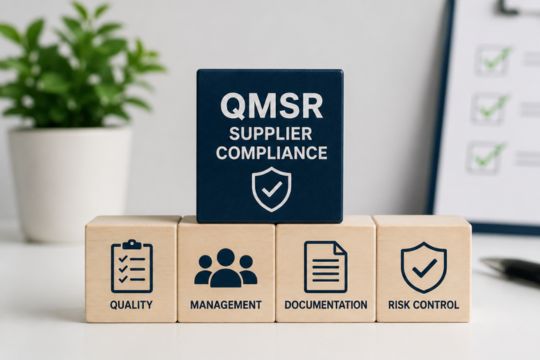
In reality, the FDA does not certify machine shops. What matters is whether the supplier operates in a way that supports your compliance under Quality System Regulation (QSR).
When you select vendors FDA compliance medical machining, you are evaluating whether their systems integrate cleanly into your own quality system.
That means looking for alignment in:
- Documented procedures governed by revision control
- Traceability to material heat lots and batch records
- Support for Device History File (DHF) and Device Master Record (DMR) requirements
- Defined inspection points embedded in production routing
- Controlled handling of nonconformances and CAPA
If you’re reviewing suppliers that position themselves around FDA compliant medical machining, your job is to verify that claim through documentation and process control, not just marketing language.
In real audits, this distinction becomes critical. Auditors rarely ask, “Is your vendor compliant?” Instead, they ask, “How do you ensure your supplier’s processes meet your quality requirements?”
Your shortlist should answer that question before it’s ever asked.
Start with Documentation Maturity, Not Capabilities
Capabilities get attention early in sourcing. Swiss machining, tight tolerances, complex geometries. All important. But documentation maturity is what determines whether a supplier can actually support regulated production.
Over time, you start to see a pattern. Shops that talk extensively about equipment but struggle to produce controlled documentation often create downstream risk.
When reviewing vendors, prioritize:
- Controlled work instructions and setup sheets tied to specific revisions
- Revision-controlled drawings with clear change history
- Defined production routing and traveler documentation
- Record retention policies aligned with regulatory expectations
- Certificates of conformance tied to specific lots and shipments
A strong supplier will not hesitate when you request documentation samples. In fact, they will often provide structured packets that mirror what you would expect during an audit.
In practice, I’ve seen suppliers disqualified not because they lacked capability, but because they couldn’t produce consistent documentation across multiple jobs. That inconsistency becomes a liability during audits.
This is one of the fastest ways to separate capable vendors from compliant ones.
Evaluate Process Control and Repeatability

Engineering will naturally focus on whether a vendor can make the part. Procurement needs to focus on whether they can make it consistently over time.
This is where process control becomes a deciding factor.
Look for signs of:
- Stable tooling and fixture setups that support repeatability
- Defined operation sequences documented in routing sheets
- In-process inspection checkpoints, not just final inspection
- First article inspection (FAI) protocols tied to initial production runs
- Calibration control across all measurement equipment
In real production environments, repeatability is everything. Machine repeatability, fixture stability, and consistent setup procedures all contribute to reliable output.
This often becomes an issue when volumes increase or when multiple operators are involved. Without documented setup procedures and inspection checkpoints, variation creeps in.
Vendors with mature systems understand this and build controls into their workflow, rather than relying on operator experience alone.
Traceability Is Non-Negotiable
If there is one area where procurement decisions get challenged most often, it is traceability.
You need to be confident that any component can be traced:
- Back to raw material heat lot or batch
- Through each step of production routing
- Across any subcontracted processes
- Into final inspection and shipment records
When you select vendors FDA compliance medical machining, traceability should not be something you “confirm later.” It should be validated during the shortlisting phase.
Ask direct questions:
- How are lots identified and segregated on the floor?
- How is material certification linked to production travelers?
- How do you prevent mixing of lots during changeovers?
- What happens if a discrepancy is discovered post-shipment?
- How quickly can affected lots be isolated?
In practice, weak traceability doesn’t show up until there is a problem. And by then, the cost of containment, investigation, and potential recall escalates quickly.
I’ve seen situations where a supplier could not isolate affected parts due to incomplete lot tracking. That turns a contained issue into a broad exposure event.
Traceability is not just a requirement. It is your safety net.
Understand How They Handle Nonconformance and CAPA
Every supplier will encounter issues. What matters is how they respond and how consistently they document that response.
Experienced procurement professionals pay close attention to how vendors manage:
- Nonconformance reporting and documentation
- Root cause analysis methods
- Corrective and preventive actions (CAPA)
- Communication protocols during quality events
A strong supplier will have a structured process for documenting issues, identifying root causes, and implementing corrective actions. More importantly, they will be able to show evidence of follow-through.
In real audits, this is where suppliers are often exposed. It’s not the issue itself that raises concern. It’s the lack of documentation or incomplete CAPA execution.
You are not looking for perfection. You are looking for consistency, transparency, and accountability.
Don’t Overlook Subcontracted Processes
Many machining vendors rely on outside partners for processes like plating, anodizing, passivation, or heat treatment.
This introduces another layer of risk that procurement cannot ignore.
When reviewing vendors, confirm:
- How subcontractors are qualified and approved
- Whether quality agreements are in place
- How documentation flows between the machining vendor and subcontractor
- How traceability is maintained across outsourced processes
- Whether special processes are validated and controlled
In practice, this is a common gap. The machining process may be tightly controlled, but subcontracted steps lack the same level of oversight.
This often becomes an issue during audits, where gaps in subcontractor documentation can trigger findings.
Cross-functional review helps prevent this. Quality and engineering often want visibility into these relationships, especially when special processes are involved.
Assess Audit Readiness, Not Just Certifications

Certifications like ISO 13485 are important, but they are not the full picture.
What matters more is how audit-ready the supplier actually is on a day-to-day basis.
You can often gauge this by:
- How quickly they provide requested documentation
- Whether records are organized and easily retrievable
- How clearly they explain their process controls
- Whether they demonstrate familiarity with FDA expectations
In real audits, unprepared suppliers create immediate pressure on your team. Delays in producing records or unclear responses raise red flags quickly.
I’ve sat in audits where supplier documentation delays became the focal point of the discussion. That’s not a position you want to be in.
Your shortlist should prioritize vendors who operate as if they are always audit-ready, not just when an audit is scheduled.
Watch for Red Flags During the Evaluation Process
Some of the most valuable insights come from what vendors don’t show you.
Common red flags include:
- Inconsistent or incomplete documentation packets
- Vague answers around traceability or revision control
- Overreliance on final inspection instead of process control
- Limited visibility into subcontracted processes
- Lack of structured CAPA documentation
Over time, you start to recognize these patterns early. Vendors may appear competitive on cost, but these gaps often lead to delays, quality issues, or compliance risks later.
In practice, the lowest-cost vendor often becomes the highest-cost problem when documentation gaps surface.
Shortlisting is about reducing those risks before they become real issues.
Align Procurement, Engineering, and Quality Early
The strongest supplier decisions happen when procurement, engineering, and quality are aligned from the start.
Engineering may focus on manufacturability and tolerances. Quality evaluates system compliance and documentation. Procurement balances cost, lead time, and supplier reliability.
When these perspectives come together early:
- Supplier evaluations become more thorough
- Risk is identified sooner
- Vendor selection decisions are easier to justify
- Audit readiness improves across the board
In practice, cross-functional alignment prevents rework later. It also ensures that supplier selection decisions hold up under scrutiny.
When procurement and engineering align early, supplier conversations become more productive and more focused on long-term success.
Conclusion
Shortlisting machining vendors in a regulated environment is not about finding the lowest price or the fastest turnaround. It’s about building a supplier base you can trust under audit conditions and real-world pressure.
When you take the time to evaluate documentation control, process consistency, traceability, and audit readiness, you move from reactive sourcing to strategic procurement.
That shift matters.
Because when issues arise or audits happen, your shortlist becomes your first line of defense.
If you’re actively sourcing and need support from a team experienced in regulated manufacturing, you can request medical component quotes.