.png)

Introduction
If you’ve been in procurement long enough, you’ve likely had that moment during an audit where someone asks, “How did this supplier get approved?” and all eyes quietly turn your direction.
It’s not that you didn’t do your job. It’s that supplier evaluation in medical manufacturing isn’t just about pricing, lead times, or even past performance. It’s about defensibility. You need to show that your decisions hold up under scrutiny from quality, engineering, and potentially the FDA.
That’s where a structured medical device supplier audit checklist becomes essential. Not just a formality, but a working tool that helps you evaluate suppliers consistently, document your rationale, and reduce downstream risk.
In this guide, I’ll walk you through how experienced procurement professionals approach supplier audits in real-world conditions. You’ll learn what to look for, what tends to get missed, and how to align with quality and engineering without overcomplicating the process.
Why Supplier Audits Matter More Than You Think

On paper, supplier audits are about compliance with standards like 21 CFR Part 820 or ISO 13485. In practice, they’re about risk containment.
Most supplier-related issues don’t show up immediately. They surface later as:
- Missing certs during lot release
- Inconsistent dimensional results between batches
- Undocumented process changes
- Delays tied to subcontracted processes
Over time, you start to see that weak supplier qualification leads to firefighting across departments. Procurement gets pulled in, quality escalates, and engineering has to revalidate assumptions.
A well-executed medical device supplier audit checklist helps prevent those situations before they start.
Pre-Audit Preparation: Where Procurement Sets the Tone
Before you even step on-site or conduct a remote audit, preparation determines how effective your audit will be.
Define Scope and Risk Level
Not every supplier needs the same level of scrutiny. A risk-based audit approach should consider:
- Criticality of the component
- Complexity of the manufacturing process
- Use of special processes (plating, heat treating, etc.)
- Regulatory exposure
For example, a precision Swiss-machined implant component requires a deeper audit than a non-critical bracket.
Review Documentation in Advance
Before the audit, request:
- Quality manual
- Process flow diagrams or routing sheets
- Sample travelers or production records
- Calibration records
- Recent non-conformance reports
This gives you a baseline and helps you identify areas to probe during the audit.
Align Internally
When procurement and engineering align early, audits become far more effective.
- Engineering may want confirmation of process capability or tooling stability
- Quality will focus on CAPA systems and documentation control
- Procurement ensures commercial and delivery risks are addressed
Cross-functional review helps prevent gaps that often surface later.
Onsite Audit vs. Remote Audit: What Changes?
The shift toward remote audits has made things more efficient, but also more limited.
Remote vs Onsite Supplier Audits
Remote audits work well for:
- Documentation reviews
- QMS verification
- Follow-up audits
On-site audits are still critical for:
- Observing actual production conditions
- Verifying machine repeatability and setup consistency
- Reviewing how operators follow travelers and set up sheets
- Confirming environmental controls and shop floor discipline
In real audits, what’s written in procedures doesn’t always match what happens on the floor. That’s why onsite visibility still matters, especially for machining suppliers.
Core Sections of a Medical Device Supplier Audit Checklist
A strong medical device supplier audit checklist covers more than just quality systems. It should reflect how the supplier actually operates.
1. Quality Management System (QMS)
Start with the foundation.
Key areas to review:
- Compliance with 21 CFR Part 820 or ISO 13485
- Document control procedures
- Internal audit program
- Management review processes
Look for consistency between documented procedures and actual execution.
Red flag: Procedures exist but are outdated or inconsistently followed.
2. Documentation Control and Traceability
This is where many suppliers either demonstrate maturity or expose risk.
You should verify:
- Revision control on drawings and work instructions
- Record retention policies
- Traceability to the material heat lot or batch
- Certificates of conformance tied to production lots
Pay special attention to how traceability flows through the production process.
For deeper insight into this area, review how suppliers handle medical machining traceability in their quality systems.
In practice, Weak traceability often becomes a major issue during recalls or investigations.
3. Production Process Controls
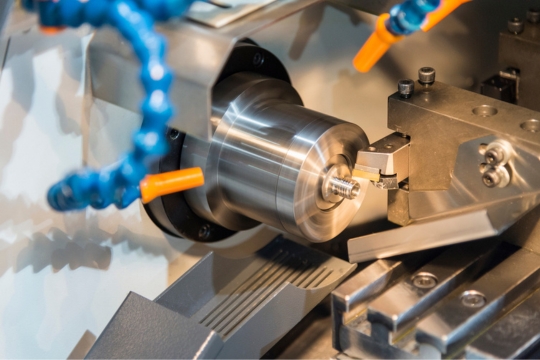
You’re not auditing machining techniques, but you are validating process control.
Look for:
- Clear production routing and travelers
- Defined operation sequences
- Set up sheets used consistently
- In-process inspection points
Ask how they ensure repeatability between runs.
What you’re really assessing:
- Process consistency
- Operator adherence to instructions
- Stability of tooling and fixtures
4. Inspection and Validation
Quality should be built into the process, not inspected at the end.
Key elements:
- First article inspection (FAI) procedures
- In-process inspection checkpoints
- Final inspection protocols
- Manufacturing process validation for critical features
Quality and engineering often review whether the inspection aligns with design intent.
Red flag: Over-reliance on final inspection without upstream controls.
5. Calibration and Equipment Control
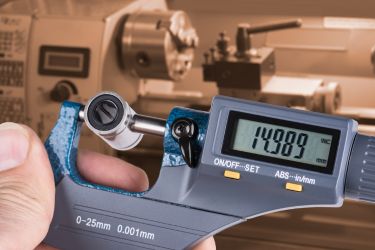
Measurement systems must be reliable.
Verify:
- Calibration schedules
- Traceability to NIST or equivalent standards
- Equipment maintenance logs
Calibration gaps can invalidate inspection data, which becomes a serious issue during audits.
6. Non-Conformance and CAPA
This is one of the most revealing sections of any audit.
Review:
- Non-conformance report handling
- Root cause analysis methods
- CAPA effectiveness tracking
- Recurrence of similar issues
In real audits, you’re looking for whether the supplier actually learns from issues or just documents them.
Red flag: Repeated issues with no meaningful corrective action.
7. Supplier Performance Monitoring
Good suppliers monitor themselves.
Ask about:
- On-time delivery metrics
- Quality performance trends
- Internal supplier scorecards
A mature supplier should be able to show you how they track and respond to performance data.
8. Subcontractor Control
Many machining suppliers rely on outside vendors for finishing processes.
You need to understand:
- How subcontractors are qualified
- How their work is verified
- How traceability is maintained across suppliers
This often becomes an issue when documentation gaps occur between organizations.
9. Personnel Training and Competency
Processes are only as reliable as the people running them.
Review:
- Training records
- Operator qualifications
- Ongoing competency evaluations
In practice, Shops with strong training programs tend to have fewer quality escapes.
10. Environmental and Facility Controls
Depending on the product, the environment matters.
Look for:
- Cleanliness standards
- Temperature or humidity controls (if required)
- Organization and material handling practices
These factors can impact consistency, especially for tight-tolerance components.
Common Pitfalls Procurement Should Watch For
After years of audits, certain patterns keep recurring.
1. Overreliance on Certifications
Just because a supplier is ISO certified doesn’t mean their processes are robust.
Certifications are a starting point, not proof of capability.
2. Incomplete Audit Findings Follow-Up
An audit is only as valuable as what happens afterward.
Make sure:
- Audit findings are documented clearly
- Corrective actions are tracked
- Closure is verified
Too often, findings are logged but never resolved.
3. Weak Communication Between Departments
When procurement, quality, and engineering operate in silos, gaps appear.
Cross-functional collaboration ensures:
- Technical risks are identified early
- Supplier capabilities are properly vetted
- Audit results are interpreted correctly
4. Ignoring Process Changes
One of the biggest risks is undocumented changes.
Ask suppliers:
- How do they control process changes
- How customers are notified
- How validation is handled
Failure to manage this properly can lead to FDA 483 observations.
Building a Practical Quality Audit Template
If you’re developing your own quality audit template, keep it usable.
It should:
- Be structured but flexible
- Allow for notes and observations
- Capture both compliance and practical risk
A good template doesn’t just check boxes. It helps you tell the supplier's story.
Final Thoughts

Supplier audits aren’t about catching suppliers doing something wrong. They’re about making sure you can stand behind your sourcing decisions when it matters most.
When you use a structured medical device supplier audit checklist, you reduce uncertainty, strengthen cross-functional alignment, and build a more defensible supply chain.
Over time, you’ll find that the best suppliers welcome these audits because they operate with the same level of discipline you’re trying to enforce.
And when you’re ready to evaluate suppliers that align with those expectations, it’s worth understanding their full scope of medical component production capabilities before making a final decision.