.png)

If you’ve spent any time in medical device procurement, you already know the pressure that comes with supplier selection. You’re balancing cost targets, delivery expectations, engineering preferences, and regulatory scrutiny, often all at once. In practice, you’re not just buying machined components; you’re defending sourcing decisions during audits, explaining supplier choices to quality, and absorbing the risk when something goes wrong.
One area where those pressures converge is certification. The importance of ISO 9001 and ISO 13485 in supplier selection becomes very real the first time an auditor asks why a critical machining supplier doesn’t hold a recognized quality certification—or when engineering flags a documentation gap you didn’t know existed. Over time, you start to see that ISO certifications aren’t about badges or marketing claims. They’re about predictability, risk containment, and your ability to stand behind a supplier with confidence.
In this article, you’ll learn how to evaluate ISO 9001 and ISO 13485 from a procurement perspective, how they affect supplier quality assurance and risk management, and how to use them intelligently during vendor qualification—without treating them as a checkbox exercise.
Why certifications matter beyond compliance
On paper, ISO certifications signal that a supplier follows an established quality management system (QMS). In real audits, they function as a shorthand for maturity. When a shop is certified, you can reasonably expect controlled documentation, defined process ownership, and traceability that doesn’t collapse under scrutiny.
Procurement feels the impact most when those systems are missing. Late deliveries often stem from undocumented process changes. Nonconformances escalate because there’s no clear CAPA workflow. Engineering questions repeat because revision control isn’t enforced at the shop floor level. These issues don’t usually announce themselves during quoting—they surface months later, when you’re already exposed.
This is where the importance of ISO 9001 and ISO 13485 in supplier selection becomes practical. Certifications reduce uncertainty. They don’t eliminate risk, but they make risk visible and manageable.
ISO 9001: the baseline you should expect
ISO 9001 is often described as a general quality standard—and that’s accurate—but, from a procurement lens, its value lies in consistency. A certified supplier should have defined production routing, travelers that reflect current revisions, calibration control for inspection equipment, and documented nonconformance handling.
In practice, ISO 9001 gives you confidence that:
- Work instructions and setup sheets are controlled, not tribal knowledge
- Process changes flow through documented approval paths
- Inspection results are recorded, retained, and traceable
- Corrective actions don’t stop at containment
When procurement and engineering align early, ISO 9001-certified suppliers tend to require fewer follow-up explanations. Engineering may still request FAIs or capability data, but the foundational systems are usually in place. That reduces friction during onboarding and shortens the time between approval and production.
ISO 13485: when regulatory risk enters the picture
ISO 13485 raises the bar, particularly for medical device manufacturing. It builds on quality management principles but adds explicit controls around risk management, traceability, and regulatory compliance. From procurement’s standpoint, this is where supplier evaluation becomes less about preference and more about protection.
Suppliers certified to ISO 13485 are expected to manage risk proactively. That includes documented risk-based thinking, lot isolation procedures, validation of special processes, and clear control over subcontracted operations. In real audits, these elements matter far more than theoretical compliance.
Over time, you start to see why the importance of ISO 9001 and ISO 13485 in supplier selection increases as parts move closer to patient impact. ISO 13485 doesn’t just support quality, it supports defensibility when regulators or notified bodies review your supply chain.
Key differences procurement should care about
From the outside, ISO 9001 and ISO 13485 can look similar. Internally, they drive very different supplier behaviors. ISO 9001 focuses on system effectiveness and customer satisfaction. ISO 13485 focuses on safety, traceability, and regulatory alignment.
For procurement, the differences show up in areas like:
- Documentation depth: ISO 13485 demands tighter revision control and longer record retention
- Risk management: Formal risk assessments are expected, not optional
- Traceability: Heat lot, batch, and process traceability are foundational, not value-adds
- Change control: Undocumented process changes are treated as systemic failures
When auditing precision machining suppliers, these distinctions matter. A shop that performs well under ISO 9001 may still struggle with the rigor ISO 13485 requires, especially around subcontracted processes or special process validation.
Using certifications during supplier qualification
Certifications should never replace due diligence, but they should absolutely shape how you conduct it. In practice, ISO certification gives you a framework to evaluate how a supplier thinks, not just how they machine parts. When you review a potential supplier, certifications help you prioritize where to probe deeper during qualification rather than starting from scratch every time.
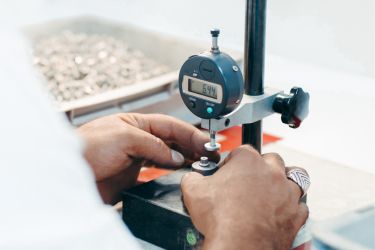
For example, a supplier claiming ISO 9001 or ISO 13485 certification should be able to clearly explain how production routing aligns with controlled travelers, how setup sheets are revised and released, and how in-process inspection points are documented. If those answers are vague, that’s often an early signal that the system exists on paper but isn’t fully embedded in daily operations.
This is where procurement experience matters. Over time, you learn to look past the certificate and into how the quality management system behaves under pressure—engineering changes, expedited orders, or short production runs. Effective supplier quality assurance means verifying that certifications translate into predictable outcomes: stable processes, documented change control, and nonconformance handling that doesn’t rely on informal fixes. When procurement and engineering align early during qualification, certification becomes a risk-reduction tool rather than a false sense of security.
Certifications and risk mitigation
Risk in medical supply chains rarely comes from a single, obvious failure. More often, it builds quietly through small gaps—missing certificates of conformance, undocumented process tweaks, unclear subcontractor controls, or inspection records that can’t be reconstructed months later. ISO-certified systems are designed to surface those gaps early, before they turn into audit findings or field issues.
ISO 13485, in particular, supports risk mitigation by forcing discipline around failure containment and traceability. When a deviation occurs, you should expect lot isolation procedures to be immediate and documented, not debated. Root cause analysis should extend beyond operator error to include process controls, tooling stability, and inspection methodology. In real audits, these details matter more than how quickly a supplier responds.
From a procurement standpoint, suppliers with mature ISO systems respond predictably under stress. They don’t improvise solutions that introduce new risk. They follow documented workflows, escalate issues appropriately, and provide records that stand up to review. That predictability is exactly what procurement relies on when defending supplier decisions during regulatory inspections or internal quality reviews.
Supplier evaluation beyond the certificate
A common pitfall is assuming certification equals capability. It doesn’t. Certification tells you the system exists, not how well it performs under load. That’s why procurement should still ask practical questions during evaluation.
Consider how the supplier manages:
- Process consistency across changeovers and setups
- Fixture and tooling stability over long runs
- In-process inspection versus end-of-line inspection
- Subcontractor documentation and oversight
These questions don’t require engineering-level detail, but they indicate whether the supplier operates within their QMS or works around it. In real audits, those distinctions are obvious.
For a deeper look at how quality systems are implemented in machining environments, reviewing resources on precision machining quality control can help align procurement expectations with shop-floor realities:

Regulatory alignment and audit readiness
Procurement often becomes the bridge between suppliers and regulators, whether formally or informally. During FDA audits or notified body reviews, supplier files are scrutinized. Missing documentation becomes your problem, not the supplier’s.
ISO 13485 supports FDA compliance for contract manufacturers by aligning supplier practices with regulatory expectations. It doesn’t guarantee compliance, but it reduces surprises. Over time, you come to appreciate how much smoother audits run when supplier documentation is complete, controlled, and up to date.
This is another reason the importance of ISO 9001 and ISO 13485 in supplier selection can’t be overstated. Certifications don’t just protect product quality—they protect your audit posture.
Common misconceptions to avoid
One misconception is that smaller shops can’t support certified systems. In practice, size matters less than discipline. Some of the most reliable suppliers are small operations with strong documentation controls and stable processes.
Another misconception is treating certification as permanent. Certifications lapse, scopes change, and systems degrade if not maintained. Procurement should periodically confirm certification status and scope relevance, especially when parts or volumes change.
Finally, don’t assume engineering automatically trusts certified suppliers. Engineering may request additional evidence, such as FAIs, capability data, or validation summaries. That’s a healthy cross-functional review, not distrust.
Conclusion
Procurement decisions live longer than most people expect. Years after onboarding a supplier, you may still be answering questions about why they were approved. That’s where confidence matters.
Understanding the importance of ISO 9001 and ISO 13485 in supplier selection enables you to evaluate suppliers with clarity, communicate effectively with quality and engineering teams, and manage risk without overcomplicating the process. Certifications aren’t a guarantee—but they are a strong signal of system maturity, discipline, and accountability.
When you need formal proof to support your sourcing decisions, having clear, accessible documentation of ISO 9001 and ISO 13485 certifications makes that defense easier and more credible.