.png)

Procurement teams in the medical device industry rarely make sourcing decisions without pressure from engineering schedules, regulatory expectations, production timelines, and cost targets.
That is why the earliest supplier conversations often determine whether a program runs smoothly or becomes difficult to manage later.
When evaluating questions procurement teams should ask precision machining vendors for medical device parts. The goal is not simply to compare pricing or machine capacity. You are assessing process maturity, documentation discipline, traceability controls, and long-term supplier reliability.
Experienced procurement professionals learn quickly that strong suppliers usually provide clear answers backed by documented systems, while weaker suppliers often rely on vague explanations or incomplete controls.
This article outlines the key questions procurement professionals should ask before qualifying or expanding work with a machining supplier supporting medical device manufacturing.
Questions Procurement Teams Should Ask Precision Machining Vendors for Medical Device Parts

One of the first questions procurement should ask is whether the supplier operates under a formal quality management system for medical parts.
Many machine shops claim to support medical work, but not all operate within systems designed for regulated manufacturing environments tied to medical device contract manufacturing. A supplier may produce dimensionally acceptable parts while still lacking the process controls needed for medical device contract manufacturing.
Ask whether the vendor maintains current ISO 13485 certification and how that certification applies to the specific facility producing your parts.
Quality and engineering often review:
- Certification scope
- Audit history
- Corrective action responsiveness
- Internal inspection controls
- Documentation procedures
- Calibration management
In real audits, experienced procurement teams also verify whether the certification body is reputable and whether any major findings have occurred during recent surveillance audits.
A mature supplier should also be able to explain:
- How nonconformances are documented
- How CAPA processes are managed
- How revision-controlled procedures are distributed internally
- How training records are maintained
- How process changes are reviewed and approved
This is often where procurement and engineering align early. Engineering may focus on technical capability, while procurement evaluates whether the supplier can consistently maintain process discipline over time.
Suppliers that invest heavily in precision machining quality control processes typically demonstrate stronger documentation consistency during onboarding and qualification.
Can They Support Material Traceability Requirements?
Material traceability is one of the clearest indicators of supplier maturity in regulated manufacturing.
Procurement teams should ask how the vendor tracks raw material from receipt through finished shipment. Weak traceability processes create significant exposure during audits, recalls, or nonconformance investigations.
Questions worth asking include:
- Can the material be traced back to the original heat lot documentation?
- How are material certifications stored and retained?
- Are travelers or routers used during production?
- How are mixed lots prevented during manufacturing?
- What controls exist for segregating nonconforming material?
- How are subcontracted special processes documented?
In practice, suppliers serving orthopedic implant machining or surgical instrument manufacturing vendors usually already understand these expectations. However, assumptions should never replace verification.
Experienced buyers also ask how long documentation is retained. Record retention gaps can become a major issue when customers request historical traceability years after production.
Strong suppliers usually maintain:
- Controlled production travelers
- Lot-level traceability systems
- Digital or archived inspection records
- Certificates of conformance
- Material test reports
- Revision-controlled routing documentation
Engineers interpret this as a sign of process maturity because it demonstrates that the supplier understands how manufacturing data connects to regulatory accountability.
How Do They Handle Process Validation and Inspection?
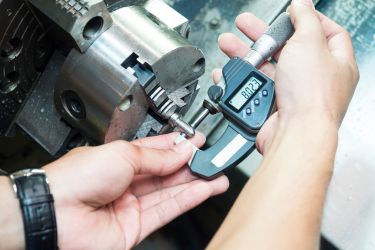
Medical device procurement decisions cannot rely solely on final inspection results.
You need confidence that quality is built into the manufacturing process itself.
Ask the supplier how they structure inspections throughout production. Experienced machining vendors should be able to describe:
- First article inspection procedures
- In-process inspection checkpoints
- Final inspection protocols
- Sampling plans
- Gage calibration controls
- Special process validation methods
This does not need to become an engineering tutorial. Instead, you are evaluating whether the supplier understands the importance of process consistency and repeatability.
For example, precision Swiss-machining environments often involve complex setups in which tooling stability, machine repeatability, and operational sequencing directly affect dimensional consistency.
Suppliers with mature systems usually discuss:
- Set up verification procedures
- Changeover controls
- Fixture validation
- Controlled setup sheets
- Operation-specific inspection requirements
In real-world manufacturing, many production problems originate during setup transitions rather than steady-state production.
Procurement teams that understand this can ask better supplier qualification questions and reduce downstream risk.
What Is Their Experience With Similar Medical Components?
Experience matters, especially in medical manufacturing.
A vendor producing general industrial components may not fully understand the documentation discipline or process controls required for medical work.
Ask suppliers:
- What types of medical parts do they currently manufacture?
- Have they supported implantable or surgical applications?
- What materials are they experienced with?
- Have they handled sourcing requirements for biocompatible materials?
- Are they familiar with customer audit expectations?
This is not about requesting confidential customer information. Instead, you are evaluating familiarity with regulated manufacturing realities.
Suppliers experienced in medical environments typically understand:
- Controlled process changes
- Customer notification requirements
- Revision management
- Inspection documentation expectations
- Lot containment procedures
- Supplier quality audit preparation
Over time, procurement professionals learn that vendors unfamiliar with medical manufacturing often underestimate documentation requirements, lead time expectations, or validation responsibilities.
That gap eventually creates friction between procurement, engineering, and supplier quality teams.
How Do They Manage Risk Within Production?
Risk management in medical manufacturing extends far beyond pricing concerns.
Procurement should ask how the supplier identifies, communicates, and contains manufacturing risk.
Questions to explore include:
- What happens when a process deviation occurs?
- How are suspect lots isolated?
- How are process changes documented?
- What triggers customer notification?
- How are recurring defects analyzed?
- How is subcontractor quality monitored?
In practice, the strongest suppliers usually have documented escalation procedures and clearly defined containment protocols.
Weak suppliers often rely on informal communication or tribal knowledge.
That becomes especially dangerous when:
- Operators change
- Secondary processes are outsourced
- Multiple revisions are active
- Tight tolerance parts are involved
- Production volumes increase rapidly
Engineering and quality teams often review supplier risk management processes because undocumented process changes can create validation concerns later.
Procurement teams should pay close attention to how confidently suppliers discuss root cause analysis and corrective action procedures.
Mature suppliers generally describe structured investigations rather than vague assurances.
Can They Realistically Meet Capacity and Lead Time Expectations?
Production capacity for medical devices should never be evaluated using optimistic estimates alone.
One of the most important questions procurement teams should ask precision machining vendors for medical device parts involves how they manage scheduling, machine utilization, and production scalability.
Ask suppliers:
- What percentage of capacity is currently utilized?
- How are expedited jobs handled?
- How many shifts operate regularly?
- What backup equipment exists?
- How are preventive maintenance schedules managed?
- What happens if critical equipment goes down?
In practice, late deliveries often originate from overloaded production schedules, insufficient staffing, or weak planning systems rather than intentional supplier negligence.
Experienced buyers also evaluate:
- Setup efficiency
- Changeover frequency
- Scheduling discipline
- Supply chain dependencies
- Outside processing turnaround times
For highly regulated programs, even minor schedule disruptions can create cascading production delays.
Procurement teams should avoid relying solely on quoted lead times without understanding the operational systems supporting them.
How Do They Support DFM Collaboration?
DFM for medical devices becomes much more effective when suppliers participate early in the discussion.
When procurement and engineering align with suppliers early, many manufacturability issues can be identified before production begins.
Ask vendors whether they routinely provide:
- Tolerance reviews
- Feature manufacturability feedback
- Material alternatives
- Cost-reduction recommendations
- Fixture recommendations
- Process sequencing input
Strong suppliers understand that collaboration improves long-term production stability.
This often becomes an issue when procurement engages suppliers too late in the product lifecycle, and preventable challenges already exist within the design.
Experienced machining vendors may identify:
- Features creating unnecessary setup complexity
- Tight tolerances with limited functional value
- Material sourcing risks
- Secondary operations affecting lead times
- Inspection challenges
Cross-functional reviews help prevent future delays, cost overruns, and quality issues.
The best supplier relationships usually develop when procurement, engineering, and quality communicate openly throughout qualification and production.
What Documentation Will Be Included With Shipments?

Documentation expectations should always be clarified before production begins.
Many procurement issues arise because assumptions were made about which records would accompany shipments.
Ask suppliers whether standard shipments include:
- Certificates of conformance
- Material certifications
- Inspection reports
- First article documentation
- Serialization records
- Special process certifications
- Subcontractor documentation
You should also clarify:
- Preferred file formats
- Revision control expectations
- Record retention periods
- Electronic documentation capabilities
- Labeling requirements
In regulated industries, missing paperwork can stop incoming inspection approval even when the parts themselves are dimensionally acceptable.
Experienced buyers understand that incomplete documentation often creates just as much operational disruption as defective parts.
This is particularly important for programs involving:
- Implantable components
- Surgical instrumentation
- Traceability-sensitive assemblies
- Multi-level supplier chains
- Tight regulatory oversight
Suppliers with mature controlled documentation systems usually answer these questions quickly and clearly.
How Transparent Are They During Audits and Problem Resolution?
Eventually, every supplier relationship encounters challenges.
The real difference between strong and weak suppliers often appears during audits, nonconformance investigations, or schedule disruptions.
Procurement teams should evaluate how transparent the supplier is when discussing:
- Previous corrective actions
- Audit findings
- Process improvements
- Scrap trends
- Customer complaints
- Capacity constraints
In real audits, experienced professionals pay attention to how consistently personnel explain procedures across departments.
If quality, operations, and management provide conflicting answers, it usually signals weak process alignment.
Strong suppliers generally demonstrate:
- Clear escalation processes
- Consistent documentation practices
- Organized records
- Structured corrective actions
- Open communication during issues
Weak suppliers often become defensive, vague, or slow to provide documentation.
That behavior frequently predicts future operational challenges.
Conclusion
Supplier qualification in medical manufacturing requires more than reviewing pricing and machine lists. The best procurement decisions usually come from asking thoughtful, experience-driven questions early in the supplier evaluation process. Procurement professionals ultimately evaluate whether a supplier can meet long-term regulatory, operational, and quality expectations without creating unnecessary risk.
The most effective sourcing conversations focus on documentation controls, traceability, process consistency, inspection discipline, communication practices, and operational maturity.
When procurement teams ask better questions upfront, they reduce the likelihood of future audit issues, delivery disruptions, and quality problems.
Over time, experienced buyers learn that reliable suppliers are usually transparent about their systems, realistic about capacity, and disciplined in how they manage manufacturing processes.
If you are evaluating suppliers for regulated manufacturing programs, reviewing a vendor’s machining and assembly capabilities alongside their quality systems and documentation controls can help support more informed sourcing decisions while reducing long-term supplier risk.