.png&description=Machining Titanium Dental Components)


Titanium dental implant components require precise dimensions, intricate connection features, and consistent manufacturing quality, as even small variations in thread geometry, surface finish, or component alignment can affect how the parts fit together.
Swiss machining titanium dental implant components offers a manufacturing method for producing small, detailed parts through controlled turning and related CNC operations. The sliding headstock and guide bushing keep the material supported near the cutting tool, reducing deflection when machining slender, small-diameter components.
Producing these components also requires careful selection of the titanium grade, cutting tools, and machining parameters, along with inspection methods that verify the finished parts meet their specifications. For manufacturers sourcing precision dental components, these factors help determine which designs are suitable for Swiss CNC machining and which supplier capabilities to prioritize.
Why Is Swiss Machining Used for Dental Components?
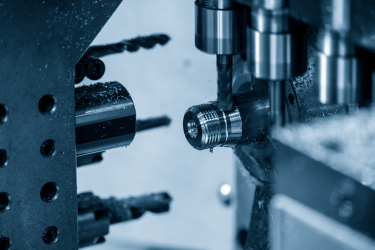
Swiss CNC screw machining uses a sliding-headstock lathe to produce small, detailed turned parts. During machining, the headstock advances the rotating bar stock through a guide bushing, allowing cutting tools to shape the material close to its point of support. This differs from conventional fixed-headstock turning, where the workpiece remains in a fixed axial position while the tools move along its length.
Swiss CNC machining can produce the external threads, shoulders, grooves, and closely controlled diameters found in certain dental components. Machines equipped with suitable tooling can also complete multiple turning and secondary operations in a single setup.
Aaero Swiss uses Citizen Swiss lathes, including L20, L16 Type VII, A16, and A20 Type VII models, to manufacture small, precision-machined components. Its machining capabilities include tolerances as tight as ±0.0001 inch, subject to component geometry, material, and manufacturing requirements.
Which Titanium Dental Components Can Be Swiss Machined?
Swiss CNC machining can produce various components used in titanium dental implants, particularly small parts with cylindrical profiles and intricate machined features.
Dental Implant Screws and Small Fasteners
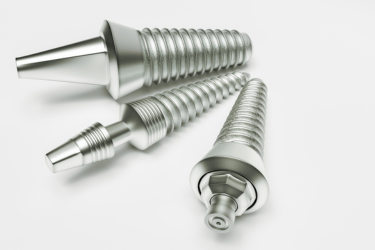
Dental implant systems use threaded screws and fasteners to secure connections between components. These parts require accurate thread profiles, controlled diameters, and precise alignment to achieve the specified fit.
Meeting these requirements when micro machining dental implant screws calls for precise control over cutting conditions, since variations can affect thread geometry and dimensional accuracy. Threads and other cylindrical features must also meet the alignment requirements specified in the engineering drawing.
Swiss CNC machining can produce these features, but the screw's dimensions, thread design, and material must be reviewed to confirm manufacturing feasibility.
Abutments and Other Precision Components
Abutments connect dental implants to prosthetic restorations. Their designs can include shoulders, grooves, internal connections, and precisely machined external profiles. Swiss machining for dental implant abutments can produce many of these features through turning and secondary operations.
More complex connection interfaces or noncylindrical geometries can require specialized tooling, additional machining operations, or a different manufacturing process. Reviewing the engineering drawings helps determine which features can be produced using Swiss CNC machining and where additional operations are needed.
Why Does Titanium Grade Matter in Dental Machining?
Medical grade titanium includes commercially pure titanium and titanium alloys with different compositions and mechanical properties. ASTM F67-24 covers four grades of unalloyed titanium used in surgical implant manufacturing, each with specific chemical and mechanical requirements.
Among the titanium alloys used in medical applications is Ti-6Al-4V ELI, commonly known as Grade 23. ELI stands for extra-low interstitial, referring to stricter limits on certain elements in the alloy. ASTM F136-26 specifies the material requirements for wrought Ti-6Al-4V ELI used in surgical implant manufacturing.
These standards define the requirements for the titanium material itself, while the finished dental implant must meet separate safety, performance, and regulatory requirements.
How Material Selection Affects Machining
Titanium grades vary in strength, ductility, and cutting behavior, influencing tool selection and machining parameters. For implant Grade 23 titanium machining, manufacturers must account for the material's condition and component dimensions when establishing cutting conditions.
Procurement teams should request material certifications identifying the titanium grade, applicable specification, and lot number when traceability documentation is required. Suppliers should also confirm their experience working with the specified grade before production begins.
What Makes Titanium Dental Components Difficult to Machine?
Titanium's low thermal conductivity and demanding cutting behavior make it difficult to machine consistently. Managing heat buildup, tool wear, and dimensional accuracy is especially challenging when producing small threads and intricate features.
Heat Concentration During Cutting
Titanium's low thermal conductivity limits heat dissipation during machining, allowing temperatures to rise near the cutting tool and workpiece interface. To manage this heat buildup, manufacturers must carefully control cooling and lubrication during machining. A 2021 review in the Journal of Materials Research and Technology discusses how these strategies affect cutting temperatures, tool wear, and the surface quality of titanium components.
Tool Wear and Dimensional Consistency
As cutting tools wear during titanium machining, they can affect thread profiles, diameters, and surface finish. A 2025 study published in Procedia CIRP found that adjusting cutting parameters and cooling conditions can reduce tool wear during Ti-6Al-4V turning, with cutting speed having the greatest influence among the factors examined.
During production, manufacturers must monitor tool wear and check critical dimensions, adjusting or replacing cutting tools before parts fall outside specified tolerances.
Small Threads and Intricate Features
Machining small threads, narrow grooves, and intricate connection features demands precise tool positioning and secure workholding. Thin sections are also prone to deflection under cutting forces, which can affect the finished dimensions. Manufacturers must plan the machining sequence around tool access and clearance, especially when multiple features are closely spaced.
Surface Finish and Burr Control
Surface finish must meet the component's design specifications, while burrs around threads, grooves, and intersecting features can interfere with assembly. Finishing and inspection methods should address the specified surface roughness, burr limits, and any additional surface treatments.
Tolerances and Geometry Control
Engineering drawings establish the dimensional and geometric requirements for titanium components, including diameter, concentricity, thread fit, and surface finish. Inspection confirms whether the finished parts meet these specifications. Biocompatibility requires separate evaluation of the finished device's materials, surface condition, manufacturing residues, and intended use.
How Is Quality Verified During Titanium Machining?
Inspecting titanium dental components starts with the dimensions and acceptance criteria specified in the engineering drawing. Critical features such as diameters, threads, concentricity, and surface finish determine what needs to be measured and which inspection methods are suitable.
During machining, dimensional checks help detect changes caused by tool wear or process variation before they affect larger quantities of parts. Final inspection then checks the finished components against the agreed specifications. Inspection frequency and measurement methods are determined by the component's complexity, critical dimensions, and specified tolerances.
Small connection details and intricate geometries can also call for specialized measurement equipment. Optical comparators and microscopes help inspect fine features, while micrometers measure dimensions and profilometers assess surface roughness. Specialized equipment helps measure small or intricate features that are difficult to inspect with standard tools.
Aaero Swiss incorporates in-process monitoring and final inspection into its ISO compliant machining quality control practices. Its inspection equipment includes a Mitutoyo optical comparator, digital microscopes, an internal-diameter micrometer, and a Mitutoyo SurfTest 401 profilometer.
For dental component projects, inspection requirements should also identify which measurement records, material traceability details, and supporting documentation need to accompany the finished parts.
How Should Manufacturers Evaluate a Swiss Machining Supplier?
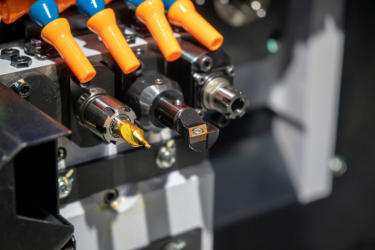
When evaluating Swiss machining suppliers, engineering and procurement teams should focus on the specific capabilities needed for their dental component designs.
The main factors to assess are:
- Material experience: Confirm familiarity with the specified titanium grade, its machining characteristics, and required material documentation.
- Component geometry: Review machining diameters, lengths, threads, internal features, and other geometric requirements.
- Tolerance capability: Ask whether the supplier can meet critical dimensions and geometric tolerances under the proposed production conditions.
- Equipment suitability: Determine whether the available Swiss CNC machines, tooling, and secondary operations fit the component design.
- Inspection requirements: Establish measurement methods, acceptance criteria, and requested inspection records.
- Production volume: Evaluate capacity for prototype quantities, pilot runs, and larger production programs.
- Technical communication: Look for a supplier that reviews drawings, identifies manufacturing challenges, and clarifies specifications before production.
Production capacity is another area where Aaero Swiss offers flexibility, handling quantities ranging from small orders to programs exceeding one million pieces.
RFQ Preparation Checklist
A detailed request for quotation (RFQ) gives suppliers the information they need to review the component design, identify machining requirements, and provide accurate pricing.
Before requesting pricing, provide:
- Current engineering drawings with revision information.
- Specified titanium grade and applicable material standard.
- Critical dimensions, tolerances, and surface finish requirements.
- Thread profiles and connection-feature specifications.
- Expected order quantity and production schedule.
- Inspection, documentation, and material traceability requirements.
- Any customer-specific manufacturing or acceptance requirements.
These details help suppliers identify machining challenges, clarify any missing specifications, and prepare a quote that accurately reflects the project requirements.
Conclusion
Choosing the right machining process for titanium dental components starts with a clear understanding of the part's design and production specifications. For small components with detailed turned features, Swiss CNC machining offers precise manufacturing capabilities when the equipment and tooling match the design.
Aaero Swiss works with manufacturers sourcing small, intricate machined parts. To discuss a potential project, submit your engineering drawings, material specifications, and expected order quantities through its custom CNC machining quote online form.